MPC
MPC (Moving Picture Company) is one of the world's leading visual effects studios, providing VFX, animation, and creative production services for feature films, television, and advertising projects. Founded in London in 1970, the company has built a strong reputation for delivering high-quality visual effects for major Hollywood blockbusters. MPC has contributed to acclaimed productions such as The Lion King (2019), The Jungle Book, 1917, and numerous Marvel and Disney films. The studio is known for its expertise in photorealistic creatures, digital environments, character animation, and large-scale visual effects simulations. With studios across North America, Europe, Asia, and Australia, MPC continues to be a major force in the global VFX industry.
Interview with Jungha Shim
As the world becomes faster and more convenient, it seems that people are increasingly drawn to analog experiences. With that idea in mind, I created a storyboard based on the concept of a messenger service that embraces a more traditional and slower way of communication for those who want to take life at a gentler pace.
The production process followed this workflow: Modeling → Texturing → Fur → Filming → Tracking → Animation → Rotoscoping → Lighting → Rendering → Nuke Compositing (+ Rotoscoping) → Blur → Color Grading.
I think creating something you genuinely want to make is important. Even when you become exhausted during production, seeing your progress can give you a sense of accomplishment and motivation to keep going. However, I also believe that tailoring your project to your chosen specialization is even more important. I created my storyboard without fully considering my intended department, and as a result, my portfolio ended up lacking a clear direction. Looking back, that is probably my biggest regret. For those who are about to start their portfolios, I highly recommend planning a concept that aligns well with your chosen field from the very beginning.
For anyone planning to create birds, make sure to carefully consider wing rigging before you begin modeling. You should think about how the wings will look both open and folded. If you plan to use feathers, it is much easier if the wing geometry is relatively flat against the wing surface, which makes rigging significantly more manageable. Since I did not take this into account, I struggled a lot during the rigging process. Because the rig was not built in an ideal way, the feathers were difficult to control, which made animating them much more challenging. On the bright side, if you decide to make a bird without feathers, it might just end up looking like a chicken—and that's not necessarily a bad thing!
I also learned that simpler scenes are often the best choice. I became overly ambitious and created twelve different scenes. Even making a small correction sometimes meant repeating the same fix twelve times, which became very time-consuming. If possible, keeping everything in a single location can make the production process much more manageable.
Even if you carefully create a production schedule, things rarely go exactly as planned. Unexpected revisions and technical issues happen all the time. Because of this, I recommend working hard and making as much progress as possible while your motivation is highest at the beginning. It is easy to think, "Rendering won't take that long," and move slowly through earlier stages, only to encounter unexpected problems later that completely drain your energy and confidence.
Specialization! Specialization! Specialization! Choosing your department clearly and confidently should be your highest priority.
As you work through an entire portfolio project, it becomes very clear which areas suit you and which do not. However, when you are first creating your storyboard, it is often difficult to know for sure. Many people simply assume that a particular department will fit them and move forward, only to become uncertain midway through production. I recommend researching the workflow of each department beforehand, even if only briefly, so that you can make a more informed decision and feel more confident about your choice.
I also think it is beneficial to study cinematography and directing before starting production. If you plan to continue working in the visual media industry, having a basic understanding of these subjects will be extremely valuable and will help improve your work in the future.
This was a place that allowed me to evaluate my abilities honestly and helped me discover the direction I want to pursue. Even though I was not particularly close with everyone, I was constantly inspired by the people around me who were working hard toward the same goals.
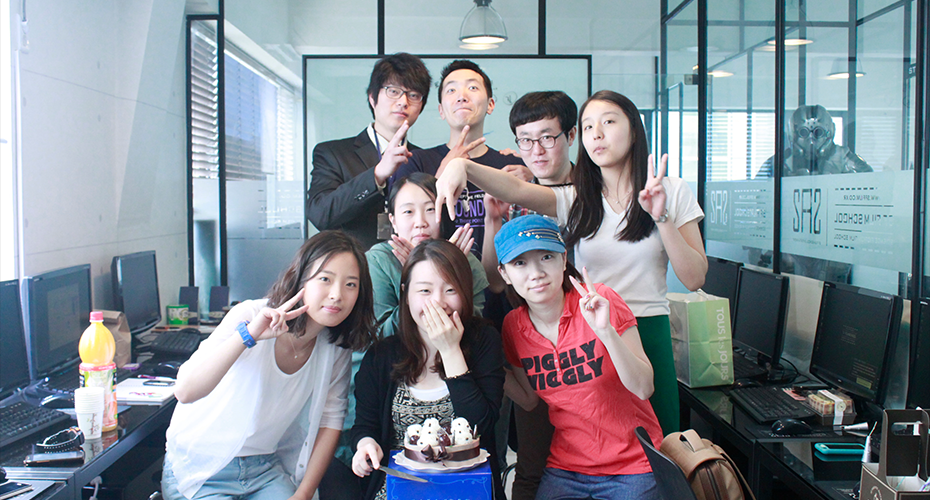
I was fortunate to share both the struggles and successes of production with my classmates. We encouraged one another throughout the process, and I do not think I could have completed my portfolio without their support. I am incredibly grateful to them. I would also like to sincerely thank all of the instructors who continuously helped and guided us throughout the journey.
Although I still worry about whether I will be successful in the future, I know that whenever I face difficult moments or uncertainty, I will remember the time I spent in the lab and find the strength to keep moving forward.
Thank you very much!!!
Jungha Shim
Key Artist