


REGULAR PROGRAMS
CAMPUS / ONLINE
SFFS's regular program takes students from the fundamentals of CG, VFX, 3D animation, games, and commercial production all the way through to a professional-level portfolio — and a job.
Led by experienced instructors, the curriculum balances artistic creativity with technical precision, built around the same production environments and workflows used in the industry. From concept development to final compositing, students move through the full pipeline rather than learning tools in isolation.
Every student is taught at their own level. Progress is individual, and instruction follows.
ENVIRONMENT DESIGN
Every world you've seen on screen, whether a war-torn city, an alien landscape,
or a period-accurate street, was designed and built by an environment artist.
This program covers the full process of creating digital sets and environments for film and production:
concept, modeling, texturing, and lighting.
You'll develop the eye for scale, detail, and atmosphere that separates a convincing world from a forgettable backdrop.
CURRICULUM


BASIC & MODELING
- Interface
- Basic Shading
- Basic V-ray
- Basic Modeling Exerciese
- modeling Exercise

UV & TEXTURE
- UV Map
- V-ray Material
- Subdivision
- Textureing

SHADING & LIGHTING
- Basic Shading
- Basic Lighting
- Textureing
- Physical Light
- IES


CAMERA & RENDERPASS
RIGGING & ANIMATION
- Basic Camera
- Using 3D Camera
- Basic Render pass
- Render pass Setting
- Compositing
- Basic Rigging
- Basic Animation
- Constrain
- Set Driven
- Motin path
- Key animation
- Expression
- Motion Capture


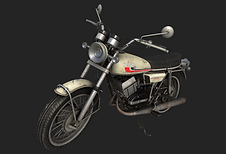
Tool Basics
UV & TEXTURE
Texture Creation
Export & Pipeline Integration
- Understanding the UI and project settings
- Understanding the viewport, layers, and material panel
- Concept of the PBR workflow
- UV layout and mapping optimization
- Basic normal and ambient occlusion baking
(Baking affects the quality of the final texturing result)
- Smart materials and masks
- Layer-based painting
- Adding details
(scratches, roughness, metallic adjustments)
- Exporting texture maps
- Applying textures in Maya, renderers, or game engines
(Project-based practice included)

(+ Ai)

Getting Started in Nuke
- Alpha & Rotopaint 1
- Premult & Rotopaint 2
- Color, Focus, Grain match & Mask
- Cornerpin & Blend mode
- Sequence, Project setting, Rotoscoping
- Animation (2d matchmove), Curve editor, Tracker Export
- Retime, Append clip, Framehold, Denoise
- Grain, Blend mode, Write (render)
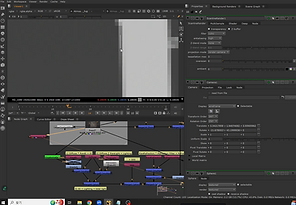
Compositing & 3D in Nuke
- Tracking 1, Auto stabilize, User stabilize
- Tracking 2, Remove 1, Rotopaint 3
- Tracking 3, Remove 2, Cornerpin Matchmove
- Channel & Mask, Composite detail
- Screen Keying 1, keylight, primatte, keymix
- Screen Keying 2, IBK gizmo, Despill
- Pass comp 1 ( V-ray )
- Pass comp 2 ( V-ray )

Ediging & Demo Reel Prod.
- Copycat Base (AI machine learning)
- Copycat Remove (AI machine learning)
- Copycat Rotoscoping (AI machine learning)
- AI depth create (Focus match)
- Camera tracking (nuke), Projection work flow 1
- Projection work flow 2
- Syntheyes Camera tracking, maya to nuke work flow 1
- Projection work flow 3


Zbrush Basic l
- Basics of Zbrush
- Understanding Dynamesh and Divide
- Concept of sub tool / use of transpose
- How to use a mask / Designate a polygroup using select
- Type of brush / Sculpting technique
- Basic mesh creation method
- Basic anatomy required for head sculpting
- head sculpting

Zbrush Basic ll
- Create custom alpha brushes / use vector displacement brushes
- Split and merge / Boolean
- Concept of Retopology / Introduction to Geomesher
- How to work with retopology
- Introduction to the concept of UV
- How to work with UV
- Utilization of layer / Morph target and Morph brush / Creating noise with surface function
- How to detail

Zbrush Basic III
- How to use Zbrush dynamics
- How to make basic clothes
- How to use ZModeler
- Props production using ZModeler
- Concept and production of ornaments
- Jewelry making using IMM brush
- How to make armor
- Deformation using micromesh


Creature design& texture
Mari Basic& Render
- Creature design and basic anatomy explanation
- Creature of the appearance of the creature character
- Creature character's skeleton and muscle description
- Creature character's leather and skin description
- Creature character retopology
- Describe the texture of the creature character
- Props and accessories required for creature characters
- Creature character finish
- Basics of Mari
- Concept of Mari Layers / Using Masks
- Concept and application of Mari correction layer
/ How to use procedural layer
- Concept and application of Mari channel
/ How to use materials
- Concept of scan data and how to use it
- Apply scan data
- Understanding and creating normal maps and displacement maps
- Render in Maya